Getting around shouldn’t be a challenge — but for wheelchair users and their caregivers, figuring out how to transport a wheelchair in a car can feel overwhelming. Whether you’re heading to a routine doctor’s appointment, a family event, or a medical procedure, knowing your options makes all the difference.
In this guide, we’ll walk you through the most practical methods for transporting a wheelchair in a car, the equipment you might need, and an even easier solution for residents in Rockwall, Texas, and surrounding counties.
Why Wheelchair Transportation Requires Careful Planning
Wheelchairs come in many shapes and sizes — from lightweight manual chairs to heavy power wheelchairs. Each type presents its own set of challenges when it comes to loading, securing, and traveling safely in a standard vehicle.
Poor planning can lead to:
- Injury from lifting heavy equipment
- Damage to the wheelchair or vehicle
- Safety hazards on the road if the chair isn’t properly secured
Taking the time to understand your options protects both the passenger and the caregiver.
Types of Wheelchairs and How They Affect Transport
Before choosing a transport method, it’s important to identify what type of wheelchair you’re working with.
Manual Wheelchairs
Manual wheelchairs are lighter and easier to fold. Most can be collapsed and placed in a trunk or backseat without special equipment, making them the most flexible option for standard car transport.
Power Wheelchairs and Motorized Scooters
Power wheelchairs are significantly heavier — often 100 to 300+ pounds — and typically cannot be folded. Transporting these requires specialized equipment or a wheelchair-accessible vehicle.
Transport Wheelchairs
These are lightweight, compact chairs designed specifically for easy transport. They fold quickly and are the most car-friendly option on the market.
Also read: What Is a Transport Wheelchair? Everything You Need to Know
Methods for Transporting a Wheelchair in a Car
1. Fold and Place in the Trunk or Back Seat
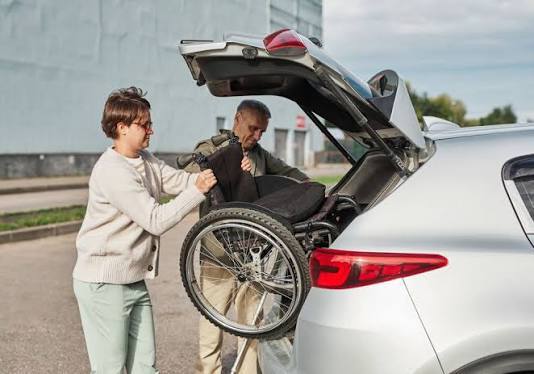
This is the most common method for manual and transport wheelchairs
How it works:
– Remove the footrests and armrests if possible to reduce bulk
– Fold the wheelchair by pulling up on the seat cushion or using the folding mechanism
– Lift the chair into the trunk or back seat
Pros: No extra equipment needed, quick and easy
Cons: Requires physical strength, not suitable for power chairs
Tip: If you’re a caregiver transporting someone frequently, consider a lightweight aluminum wheelchair to reduce strain on your back.
2. Use a Wheelchair Hitch Carrier
A hitch carrier mounts to the back of your vehicle using a standard trailer hitch. The wheelchair is loaded onto a platform and secured with straps.
How it works:
– Install a hitch receiver on your vehicle (if not already present)
– Attach the hitch carrier platform
– Roll or place the wheelchair onto the platform and strap it down
Pros: Keeps the interior of your car free, works for heavier manual chairs
Cons: Exposes the wheelchair to weather, adds length to your vehicle, may require professional installation
3. Install a Vehicle Lift or Ramp
For power wheelchairs and scooters, a lift or ramp system is often the safest option.
Types include:
- Inside lifts — store the wheelchair inside a van or SUV
- Outside platform lifts — mount to the rear of the vehicle
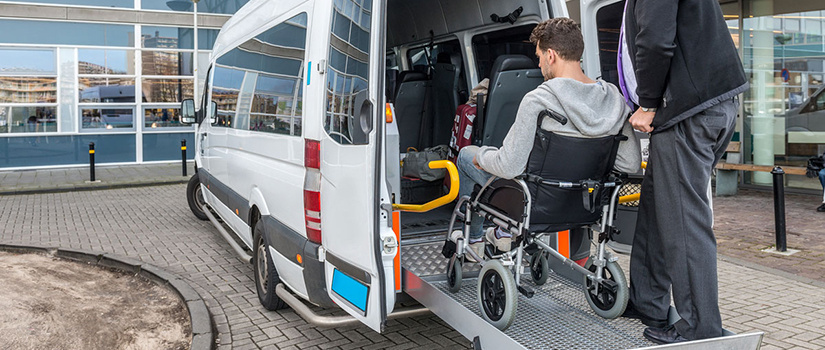
- Folding ramps — allow the user to roll directly into a van
- Pros: Safe for heavy chairs, reduces physical strain
- Cons: Expensive to install, may require a larger vehicle like a minivan or full-size van
4. Rent or Buy a Wheelchair-Accessible Vehicle (WAV)
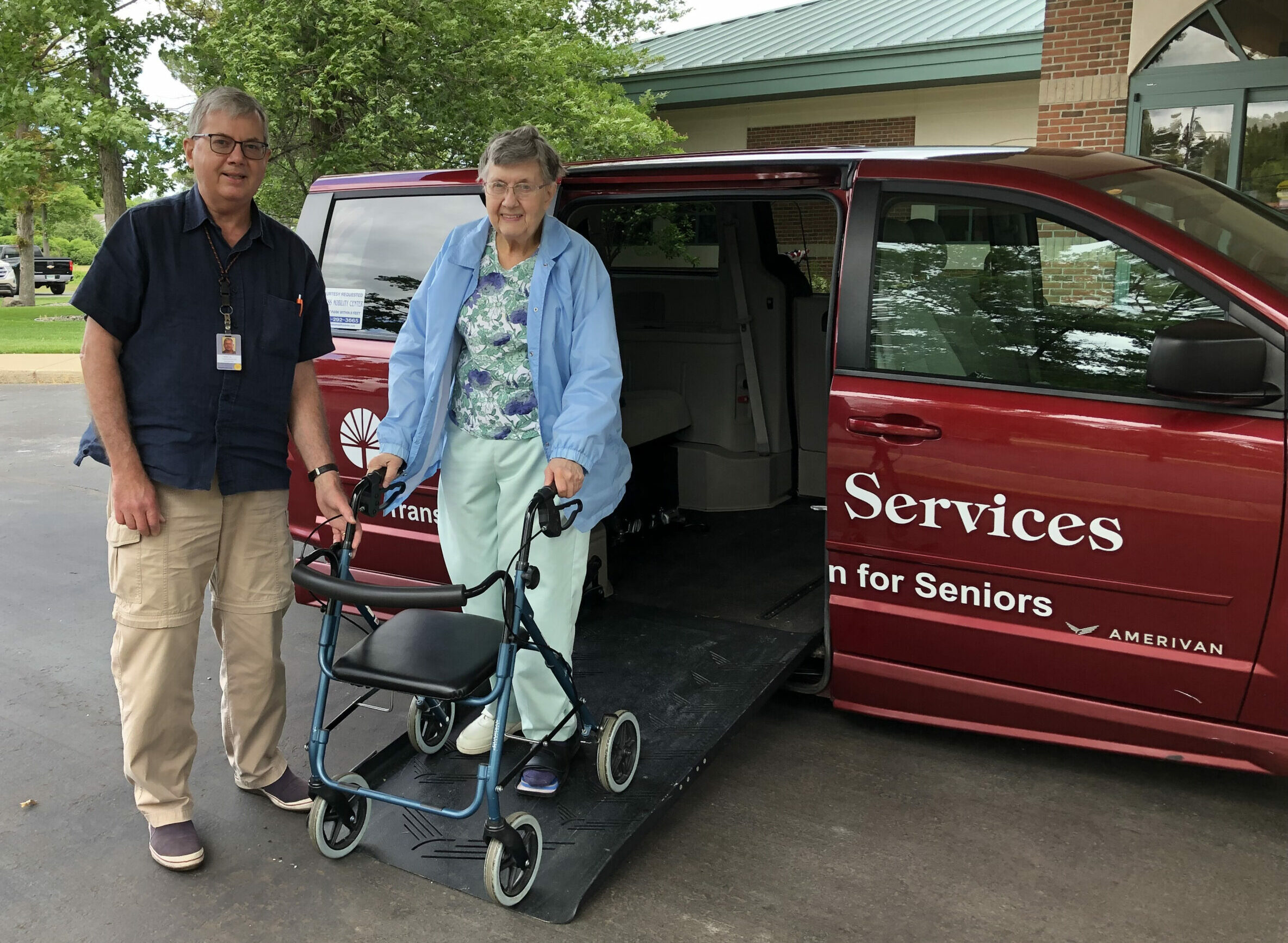
Wheelchair-accessible vehicles are modified minivans or vans with ramps, lowered floors, and tie-down systems. If you or a loved one depends on a power wheelchair full-time, this may be the most practical long-term investment.
Pros: Full independence, safe and secure transport, comfortable for the passenger
Cons: High upfront cost, ongoing maintenance
5. Use a Rooftop Carrier
Some caregivers use rooftop cargo carriers to transport folded manual wheelchairs, keeping the car’s interior free for passengers.
Pros: Frees up interior space
Cons: Requires lifting the chair overhead, only works for lighter manual chairs, weather exposure
Tips for Safely Securing a Wheelchair in a Car
Whether you’re using a trunk, hitch carrier, or van, securing the wheelchair properly is non-negotiable. Here’s how to do it right:
Use Quality Tie-Down Straps
Always use four-point tie-down straps when securing a wheelchair inside a vehicle. Attach straps to the front and rear of the chair’s frame — never to the wheels alone.
Check the Wheelchair Before Every Trip
Before hitting the road, confirm:
– All straps are tight and locked
– The chair isn’t shifting or rolling
– Footrests and armrests are secured or removed
Never Leave the Chair Unsecured While Driving
Even a short trip can result in a wheelchair shifting and causing injury or damage. Take the extra two minutes to strap it down every single time.
Follow ADA and Safety Standards
If you’re transporting someone who remains seated in their wheelchair during the ride, the vehicle must meet ADA accessibility standards and include both wheelchair tie-downs and occupant restraint systems (WTORS).
Also read: What Is Medical Transportation? A Complete Guide
The Challenge Most Caregivers Face
Even with all the right equipment, transporting a wheelchair in a car is physically demanding. Repetitive lifting and loading can cause back injuries for caregivers, and the process can be exhausting — especially before or after a long medical appointment.
For many families in Rockwall, Texas, the logistics of wheelchair transport become a daily stressor. That’s where professional non-emergency medical transportation (NEMT) makes a real difference.
A Smarter Solution: Professional Wheelchair Transportation in Rockwall, TX
If you’re tired of the struggle — or simply want a safer, more comfortable option — our ride booking service is here to help.
Why Choose Our NEMT Service?
We specialize in non-emergency medical transportation for wheelchair users throughout Rockwall, Texas, and surrounding counties including Kaufman, Dallas, and Collin County.
Here’s what sets us apart:
– ✅ Wheelchair-accessible vehicles fully equipped with ramps and tie-down systems
– ✅ Trained, professional drivers experienced in assisting wheelchair users
– ✅ Door-to-door service — we come to you
– ✅ On-time, reliable rides to medical appointments, therapy sessions, dialysis, and more
– ✅ Comfortable, stress-free travel for both passengers and caregivers
Who We Serve
Our service is perfect for:
- Seniors who use wheelchairs and no longer drive
- Patients recovering from surgery or injury
- Individuals with disabilities who need regular medical transportation
- Caregivers who need a reliable transportation partner
- Book a Ride Today
You don’t have to lift a wheelchair into a trunk one more time. Let us handle the transportation so you can focus on what matters most — your health and your loved ones.
📞 Call us today or book online to schedule your first ride. We proudly serve Rockwall, Rowlett, Garland, Forney, Fate, Heath, and surrounding areas in North Texas.
Also read: Does Medicare Cover Wheelchair Transportation? What You Need to Know
Final Thoughts
Transporting a wheelchair in a car doesn’t have to be a daily struggle. From folding manual chairs into a trunk to installing vehicle lifts for power wheelchairs, there are solutions for every situation. But when safety, comfort, and convenience are the priority — especially for medical trips — professional wheelchair transportation is the smartest choice.
For Rockwall, TX residents and neighboring communities, our NEMT service is just one call away. Reliable, accessible, and compassionate transportation — every ride, every time.
Also Visit: Wheelchair Accessible Transportation
Book Your Wheelchair Transportation Today
Don’t let a coverage gap stop you from getting the care you need. Whether you’re covered under Medicare Advantage, Medicaid, or paying privately — we’re here to help.
📞 Call us: (469) 267-7007
📅 Book online: wellnesswagons.com/book-your-ride
📍 Serving Rockwall, Plano, Dallas, and surrounding areas